
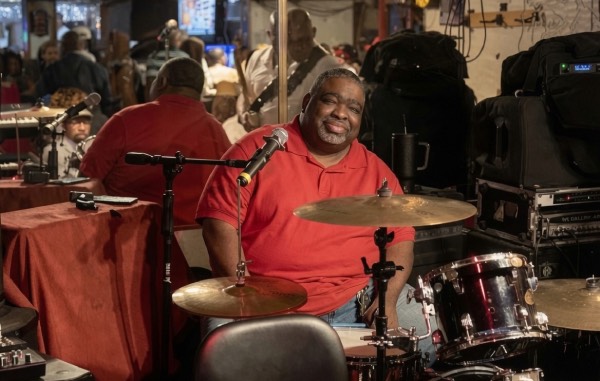
Southside drummer boy
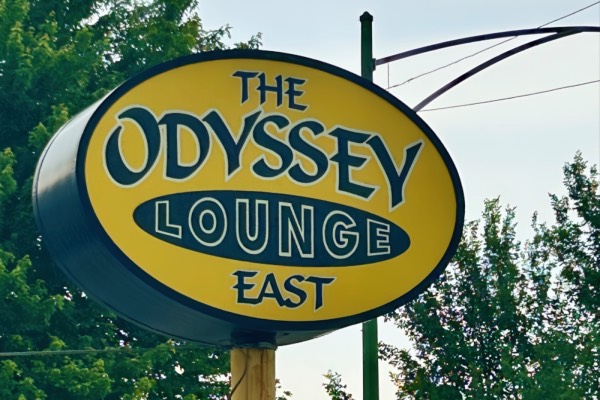
• Chicago, June 7, 2026. On this early Sunday afternoon, the sky is heavy, a leaden gray, but the muggy heat is very much present. I am heading to the South Side, towards the East Odyssey Lounge, to meet up with drummer and singer Lewis « Big Lew » Powell…
This is my second visit to this club in a few years. Finding this place is a challenge, a journey that must be earned, with my final destination nestled between 99th and 100th Street… To get there, I first enjoy the entirety of the majestic ribbon of Lake Shore Drive before diving south into the endless arteries of the Windy City. Here, winter has left its scars: the asphalt is scarred with potholes as deep as traps. You have to drive with your eyes wide open, the streets are very quiet at this hour and, for miles around, there is little traffic to help you change a flat tire. But the trip is well worth it. Chicago’s blues and soul resist here, in one of the last sanctuaries where regulars gather every Sunday to exorcise the week over a drink. After a forty-five-minute drive, I am on the threshold. I press the buzzer. It is 4 p.m. when I push the door open, and the club is already packed to the gills. A hubbub of laughter and conversation instantly envelops me. I haven’t taken three steps when a regular sitting at the bar turns to me with a welcoming smile: « I think you came for the music, but that doesn’t start until 7 p.m.!”. “I know”, I reply. “But I’ve come first to see my friend Big Lew.” On a small stage to my right, the DJ is turning up the heat with doses of Southern soul. I have an hour to spare before our interview. The perfect timing to go shake hands with Howard White, the master of the house, and greet a few familiar faces among the regulars. There stands the famous Robert Kimp, always dressed to the nines. A true fixture of the club circuit and the nightlife scene, he is an icon of style and elegance. Very active on social media, he extensively shares the atmosphere of these evenings, highlighting the artists, the venues, and the vitality of the community, in the pure tradition of South Side nightlife. No doubt about it : this was the place.
An hour later, Big Lew makes his entrance. He has just parked for a moment in a gated area on the side of the club before spotting me. He waves and introduces his wife, who came along with him: “I’ll get my drums out, set them up, and then I’m all yours ! Sit right there, across from me.” Arriving at the same time as Lewis, Stanley Banks begins setting up his keyboards. He just placed his bag on the table I’m occupying. It wasn’t planned, but I seize the opportunity and say to him: “Stanley, were you the one who recorded the 1979 45-rpm on Big Boy Records featuring the two compositions Crawl Before You Walk and If You Can’t Beat Me Rockin’ ?” He stares at me intensely. Once the surprise passes, his face lights up: “Why yes, indeed that’s me ! I didn’t expect to talk about that today!” “How did you end up on Big Bill Collins’ label?”, I follow up. “He liked my voice”, he answers. “He gave me free rein. On those two tracks, I play all the instruments myself.” Stanley recently co-founded the B&W Records label with Kirk Whiting, and two singles by Andrea Paradyce and Willie White have already been released. With Lewis all set, we step outside the club to get some quiet. It’s time to discover one of the finest musicians in the Windy City.
A family affair
“I was born on December 9, 1974, in Chicago, on the South Side. That’s where I grew up and where I’ve lived my whole life.” The Chicago sky is still just as heavy above our heads, and a few drops fall occasionally, but the journey through time has already begun. For Big Lew, the initiation didn’t have the rigor of a music school. It had the warmth of a South Side home where vinyl records spin on repeat. “My parents weren’t musicians”, he resumes. “They weren’t even singers. My dad, I think it wasn’t really his thing, but I learned to love music from my earliest days thanks to my mother. She listened to it every day. It was mostly Motown artists, but also blues and soul. In our family, we passed records around. All my aunts and uncles grew up listening to the blues too.” It’s a story of deep immersion. In Chicago, music is often caught like a benevolent virus, during family gatherings where laughter sometimes drowns out the crackle of the stylus on the groove. “That’s how, without even knowing it, I started my apprenticeship by listening to B.B. King, Bobby ‘Blue’ Bland, and so many others. Growing up, I realized that I loved it and that this music would always be by my side. My aunt used to host card games. At the end of the evening, I would clean up the basement and put blues records on her turntable. That’s how my passion started.” Cleaning up the remains of a night of gambling in a Chicago basement to the sound of Bobby Bland : the imagery is beautiful, almost cinematic. Yet, for young Lewis, this calling would take time to become obvious to those close to him.
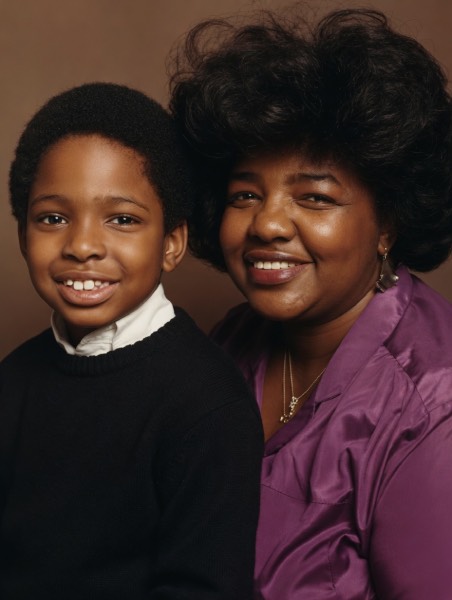
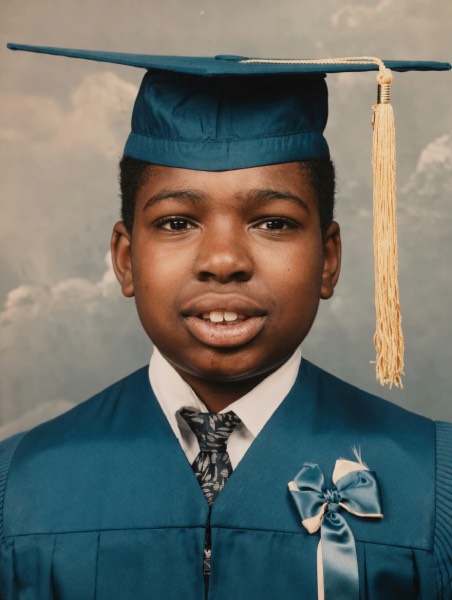
“My parents, at first, didn’t see or feel that music was something major for me. When I started getting interested in the drums, my mother saw it as just a hobby. And then, I went to Fenger High School. I must have been fourteen. I joined the school band. We were all beginners, but I had no apprehension whatsoever. I saw it as something natural. It felt natural. Obvious.” Being behind the drums is also a family affair. In the Powell family, the drum kit is not uncharted territory. It was his uncle, Vernell, who acted as a guide and steered the young man’s first steps. “Around that same time, my uncle Vernell Powell was a drummer here on the Chicago blues scene. But it wasn’t until later, around the age of nineteen, that I started hanging out with him and learning everything about the blues and all the related styles of music.” As he evokes his years of apprenticeship, his mother’s presence naturally invites itself back into the conversation. You can instantly feel the unbreakable bond that unites them. Despite her passing, her benevolent presence seems to still float around us, dictating the musician’s integrity and humility. “My mother wasn’t strict at all”, he confides, his voice softening. “She taught me to always conduct myself well and to respect others. You know, I’ve always been a respectful person toward everyone. I try to get that same respect back from people in return, even if some people aren’t that way. My mother played a huge role in my education and in how I behave today. She often told me : ‘Don’t act like a fool, Lewis! Don’t play stupid!’ So, I keep a cool head. All the time.”
Funky Drummer
Keeping a cool head, perhaps, but letting the rhythm run wild. Like all musicians of his generation, Lewis built himself an intimate pantheon, a compass of rhythms and cymbals. For him, two absolute pillars dominate the landscape, two architects of time who went through the most demanding school in the history of Black American music: James Brown’s. “There are two who, in my eyes, mean the world”, Lewis confides. “I’m thinking of Jabo Starks and Clyde Stubblefield. When I heard the track Funky Drummer, it was an absolute revelation for me. I was still in high school and I played that song every single day, on a loop. I was crazy about it. I can still see myself coming home from that record store after buying the cassette. From playing it so much, I ended up breaking it… I absolutely wanted to understand how the drummer managed to play that, I broke down his every move. It was at that precise moment that I understood the drums would be an integral part of my life. I love the drums when they are driven by a funky bassline behind them. That’s me. That’s truly what I love.”
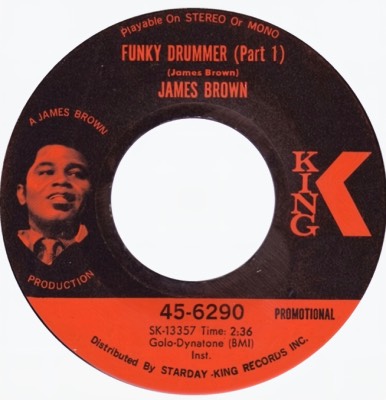
From the bedroom to the school’s rhythm section, the virus was inoculated. The family living room and the aunt’s basement were no longer enough to hold this bubbling energy. It was within the walls of Fenger Academy High School that this raw passion would find its framework, its discipline, and its first teachers. “Once my mind was set on the drums, Mr. Thomas, our music teacher in the school band, gave me invaluable advice. Throughout the year, he had us participate in inter-school competitions. That set the rhythm for my entire schooling. I did quite a few of those talent shows, and we even took second place! Those were my very first steps in music.”
Playing for keeps
High school awards and teenage dreams must eventually face the reality of the field. For Lewis, school was over. He now had his heart set on becoming a professional musician, but he had to pass the ultimate test: his very first paid gig. “I was scared to death, oh yes ! I had such bad stage fright !”, he recalls with a loud burst of laughter. “My uncle Vernell had lent me a drum kit. I was terrified because I had no idea how things were going to go, or how to handle a full night. It was, in a way, my baptism by fire. The gig took place at Katie’s Village, a club located at the corner of 75th Street and Cottage Grove. I was playing behind a guy named Chris Jesse. That was in 1996.” Twenty-two years old, knots in his stomach, and his uncle’s drumsticks in his hands, facing the demanding South Side audience. The first test was brilliantly passed. The young man held the tempo without faltering. What remained was to face the gaze that mattered most, that of his family, seeing this boy dive definitively into the fascinating world of the night… “My family knew that playing the drums was everything to me”, Lewis resumes. “But when they realized it was truly serious, and that I was now integrated into the city’s music community, the way they looked at me changed. They told me : ‘What you’re doing is really not bad, Lewis. You’re really doing your thing.’ Respect !”
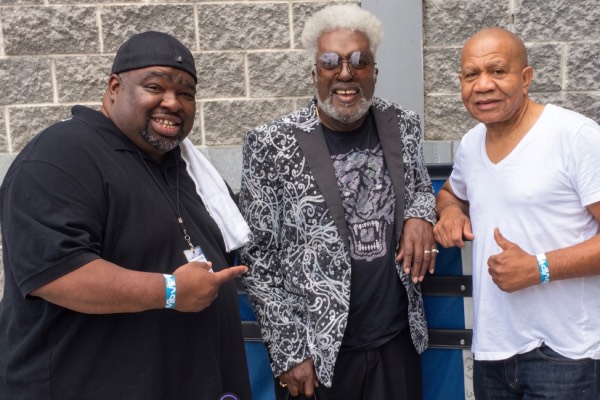
The anchor was raised. Lewis was finally going to be able to practice this trade he cherished so much : being a professional drummer. My own path crossed his a year earlier, right here in Chicago. He was holding down the rhythm section for the legendary Latimore, and the energy he projected behind his kit stayed with me (see video below : the concert’s integrality starts from 3h 03 min 31 sec).
[At the time of this publication, heartbreaking news has cast a shadow over the blues and soul community: the legendary singer and keyboardist Latimore passed away on August 22. Lewis Powell’s fond memories and deep respect for him now carry an even deeper, bittersweet resonance.]
When I share my enthusiasm and this concert memory with him, Lewis’s eyes light up. He eagerly tells me how this adventure came to life, through a story of friendship and solidarity typical of Chicago musicians.“He hired me thanks to bassist Johnnie Reed”, Lewis explains. “Who happens to be filling in for Joe Pratt tonight at the club. The frontman is playing right now alongside singer Gerald McClendon at the Chicago Blues Festival. The bassist is, fundamentally, a very close friend of Latimore. About a decade ago, Latimore contacted him because a gig was coming up in Chicago. He was actively and rather unsuccessfully looking for local musicians to back him up, and he asked Johnnie to put a band together. That’s how with him, myself, and Shawn ‘Eskeez’ Lewis on keyboards, all three of us wound up forming his band.” What was supposed to be just an improvised gig to help out a soul-blues legend would ultimately seal a collaboration spanning over a decade. In Chicago, a drummer’s reliability is worth its weight in gold. Latimore was not mistaken. “Since that first night, he has always called on us for his gigs all over the country”, he proudly adds. “The next one will be in September, actually. I say it to anyone who will listen : Latimore is my favorite boss, the best employer I’ve ever worked with. Offstage, he is a charming human being, highly intelligent, and blessed with a wonderful sense of humor.”
The vintage years at the Hot City Cocktail Lounge
Chicago holds many hidden musical gems, neighborhood sanctuaries where the city’s soundtrack was written far from the downtown spotlights. For many years, Lewis thus held down the beat at the Hot City Cocktail Lounge, a joint tucked away at 7432 South Racine Avenue. Evoking this venue is an opportunity to dive back into the golden era of his collaborations with JoJo Murray and the late singer Sidney Joe Qualls.
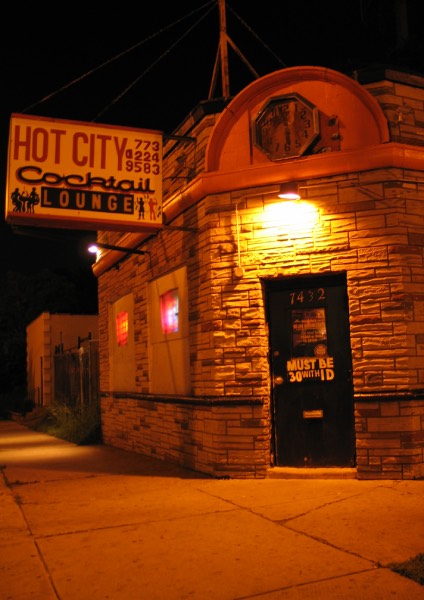
At the mention of the latter, Lewis’s gaze fills with deep admiration. “That was the time when I was playing in JoJo’s band, the Top Flight Band”, Lewis recalls. “Sidney Joe Qualls was an extraordinary singer. Nobody sang Al Green’s songs like him, he was simply unbeatable. Every Thursday night at the club, it was packed to the rafters. People came from all over just to hear him interpret that repertoire, because he brought a unique extra bit of soul to it.” From those years of nocturnal complicity, stage memories are etched forever. Among them, one legendary night stands out in Lewis’s memory: the day their small four-piece lineup shook the walls of an iconic venue in the greater Chicago suburbs. “I remember we literally tore the house down at the Sabre Room, which was located on 95th Street in Hickory Hills”, he smiles. “We were opening for two giants, Theodis Ealey and Tyrone Davis. Those two great artists had traveled with huge bands, horn sections, the whole nine yards. And us, we were only four on stage. But we swept everything in our path, it was unbelievable ! Sidney Joe delivered a phenomenal performance, he won everyone over. He was the best among us.”
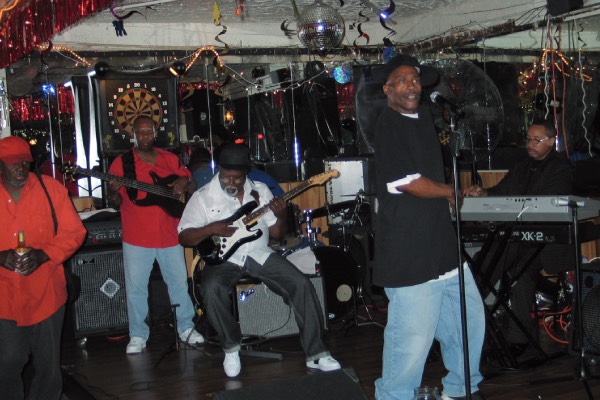
We stay inside the belly of the Hot City Cocktail Lounge to evoke that other local gem, JoJo Murray, surely one of the best-kept musical secrets in the Windy City. For Lewis, the adventure began with a simple phone call, right off an American highway.“Years ago, I was driving back from the Poconos Festival with Johnnie Reed when JoJo called me”, Lewis remembers. “He found himself without a drummer for the night at the Hot City and asked if I could fill in at a moment’s notice. I went, and I had an incredible time that night. Plus, I instantly noticed that his musicians possessed a musical technique superior to mine. For me, it was a challenge: it pushed me to play even better to try and raise myself to their level. A month later, JoJo called me back : ‘Hey man, I’d really love for you to join the band, a spot is waiting for you.’ That’s how I stayed by his side for twelve years.”
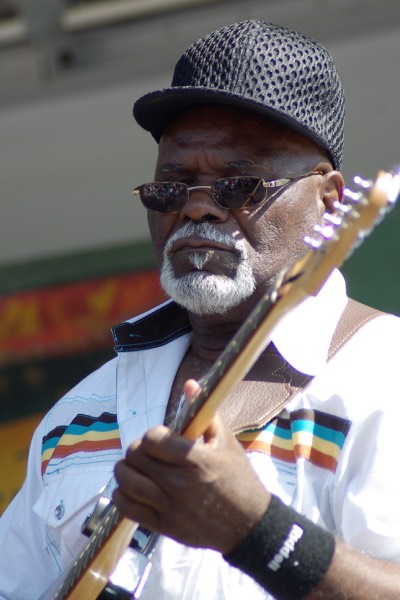
Twelve years on the razor’s edge, keeping time for a man whose talent goes far beyond simple vocal virtuosity. I point out to Lewis that in addition to being a remarkable singer, JoJo is a tremendous guitarist, even if he rarely brings out his instrument nowadays. Lewis’s face lights up again, confirming my intuition. “Oh yes, when he plays the guitar, it’s a whole different universe”, Lewis exclaims ! “He has a smooth, airy playing style that is completely captivating. JoJo Murray and Randall Matthews are undeniably among the greatest guitarists in this city.”
Nights at Lee’s Unleaded
My discussion with Lewis now turns toward one of the most legendary places in the city : the Lee’s Unleaded Cocktail Lounge, planted at 7401 South South Chicago Avenue. This legendary club is one of the strategic spots where Lewis cut his teeth. It was there, amidst the smoke and dampness of South Side nights, where he made a definitive, career-marking encounter : meeting Little Al Thomas. At the simple mention of this name, the drummer fires up. “What a voice he had !”, he follows up immediately. “Yeah… I saw Little Al for the first time at Lee’s. My uncle Vernell was playing drums there alongside Johnny Drummer. One night, with my girlfriend, we went down there just to hang out. The place was packed, the club was bursting at the seams, you could barely move. And then all of a sudden, I heard this voice. A voice of phenomenal power singing the blues. I thought to myself: ‘Who is that?’ I looked through the crowd and caught sight of this short man who was singing literally from his gut, with all his heart. He was performing Somebody Changed The Lock On My Door… holding his ring of keys in his hand, showing it to everyone! I fell under his spell that very second. »
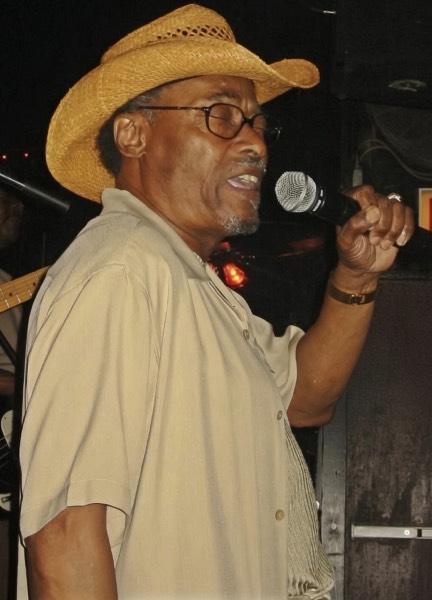
That musical lightning strike quickly turned into a stage partnership. Behind his drums, Lewis became one of the club’s pillars, the beating heart of a golden era where great names succeeded each other every weekend on the glowing marquee of Lee’s. “Subsequently, I played alongside him countless times”, Lewis continues. “For long years, every single weekend, I was on stage at Lee’s next to Johnny Drummer, who also knew how to build a wild atmosphere. We formed quite a team. That was the great era. Headlining the club, you had Shorty Mack, Nellie Tiger Travis, Vance Kelly, or Pat Scott.” Lee’s Unleaded wasn’t just a hangout for headliners, it was also home to a gallery of colorful characters, local figures who came to carve their name. I ask Lewis if he remembers that one-night singer, nicknamed the Junkyard Dog, who would show up to perform just a single track. “Oh yeah ! The Junkyard Dog !”, he exclaims. “He would come to sing Let’s Straighten It Out, and that was it ! There was also Arkansas Belly Roller… All those guys brought a crazy atmosphere to Lee’s. It’s totally unforgettable.”
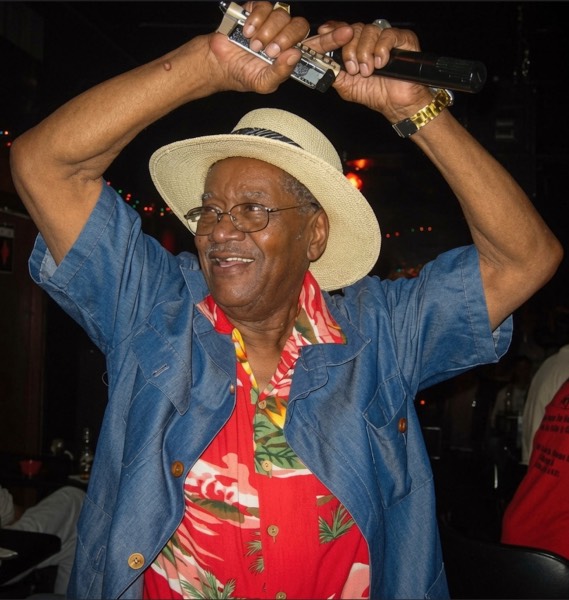
Gene’s Playmate Lounge
But the history of the Windy City’s groove isn’t written solely within the borders of the South Side. To close our journey through the city’s nocturnal geography, we shift sectors and head toward the West Side. This is the moment I choose to slip Willie White’s name into our conversation. Upon hearing it, Lewis nods, a smile on his lips. “Now he is a pure West Side singer !”, Lewis says enthusiastically. “He was right here at the Odyssey just last week. The guy is real cool, a hell of a soul singer.” I follow the trail by reminding him that Willie White’s true headquarters was the Gene’s Playmate Lounge, a staple spot located on West Cermak Road.
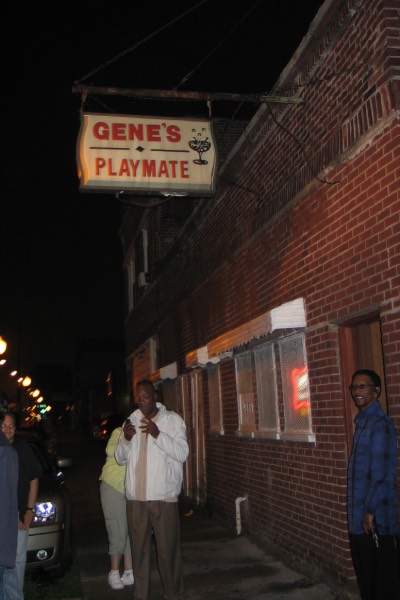
At these words, Lewis’s eyes twinkle, as if I had just awakened an old memory. “Yes, that’s exactly where I made my debut with JoJo Murray !”, he exclaims. “And you know who used to hang out there ? Otis Clay himself ! He lived right across the street from the club. So, he used to cross the street regularly, push the door open, and get up on stage to perform a song or two, just for the fun of it.”
Bettie, Artie, and Rico
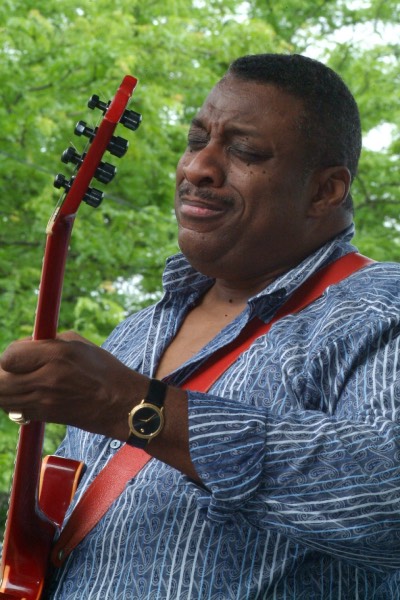
Evoking all these names of artists who are dear to us, some of whom have become true friends over the course of our travels, creates an almost familial atmosphere. It’s the perfect moment to guide Lewis onto the trail of another major figure of the Chicago guitar scene, a musician with an incisive style and a heart on his sleeve : Rico McFarland. At the sound of this name, Lewis instantly bursts into a loud, hearty laugh.“Oh, man !”, he exclaims. “Rico is like a big brother to me. You know, we spend our time teasing each other. On social media, it’s always about who’s gonna draw first ! But seriously, man, he’s exactly the kind of person you want to know in this business, here in Chicago. He knows everybody, he has an incredible amount of experience, and he’s a huge guitarist. He’s truly a good guy, I love him.”
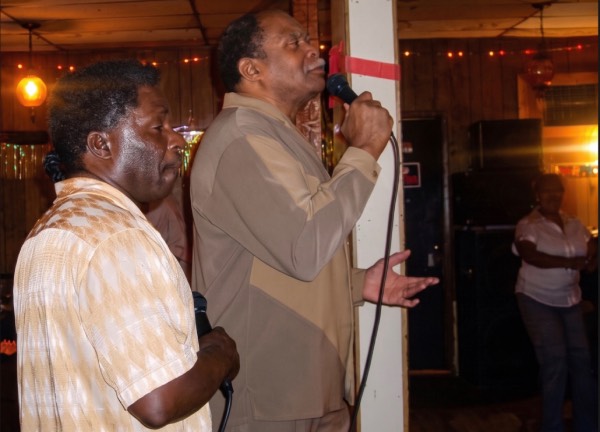
From the figure of the big brother to that of the father, there is only one step that Lewis’s memory takes with visible emotion. I then mention the name of the late singer Artie ‘Blues Boy’ White, a giant whose voice and presence long reigned over the shores of Lake Michigan. Lewis’s face lights up with a soft nostalgia. “Artie… I was his band leader for two or three years”, he confides. “The musicians in the band used to say all the time that he was my musical father ! [He bursts out laughing] As for me, I was constantly imitating him, and it made him roar with laughter. He was a massive singer, and above all, a very good person.” Behind the great men of Chicago blues, there are often women in the shadow, dignified and respected, who maintain the link between generations of musicians. Mentioning Artie White without bringing up his admirable wife, Bettie, would be incomplete. Lewis nods his head, filled with deep respect. “She is admirable”, Lewis confirms. “I’ve always kept in touch with her. She still comes here to the Odyssey from time to time, and I respect her enormously. Bettie has always shown absolute kindness toward me. She is truly a wonderful woman.”
The Real McCoy
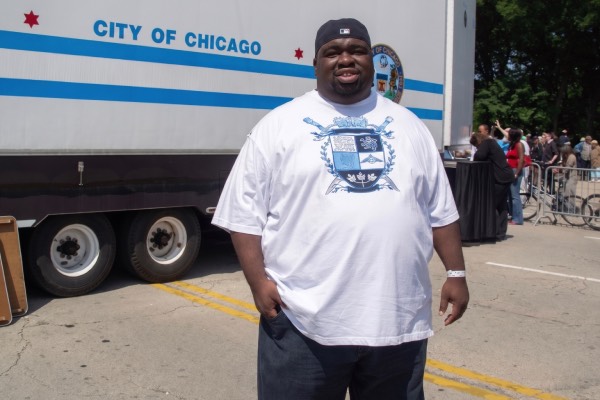
While Chicago knows Lewis for the surgical precision of his tempo, the city long ignored the treasure he hid deep in his throat. It’s time to discuss the major collaboration between Alex Dixon – grandson of blues icon Willie Dixon – and Lewis for the album “The Real McCoy”. A project hanging by a thread of fate, where Big Lew’s talents as a performer were finally brought to light. When he recalls the starting point of this adventure, about a dozen years ago, he shakes his head, still incredulous. “I was playing at the Blues Heaven Foundation alongside singer Nellie ‘Tiger’ Travis”, Lewis “During a break, I took the mic to sing the classic I Play the Blues for You. Marie Dixon, Willie’s wife, was in the room. She came straight up to me and said : ‘Young man, you have a beautiful voice.’ I replied humbly : ‘Thank you so much, ma’am.’ ‘You know, at the time, I only sang occasionally, just for fun, nothing more”. She insisted : ‘Have you ever recorded ?’ I said : ‘No, I’ve never cut a record, you know.’ So, she turned to her grandson, Alex Dixon, and gave him a clear order : ‘You absolutely must take him into the studio and have him record a blues album.’ Alex replied laconically, just to reassure her : ‘Oh, alright, grandma, we’ll see about that’…”
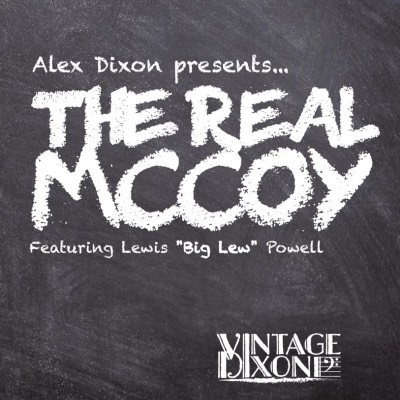
Marie Dixon passed away in 2016, taking that cherished wish with her. At least, that’s what Lewis thought. But in Chicago, promises made to the great figures of the blues always end up resurfacing. In 2019, the phone rings. “It was Alex on the line”, Lewis continues, his eyes wide open. “He told me : ‘Hey, it’s Alex. I’m launching a blues album project, and I want you to sing on it !’ I couldn’t believe my ears. I asked him : ‘Do you want me to sing or are you looking for a drummer ?’ He cut through it : ’No, I just want your voice. That’s it. Sing !’ I said okay, thinking we’d see when he was ready. Months went by, and in July 2020, he called me back : ‘Lewis, I’m sending you your plane ticket. Come to California so we can prepare the CD.’ I was completely overwhelmed : ‘What ? What are you talking about ?’ ‘I’m telling you the ticket is booked, come join me in Los Angeles.’ And he did things in style : he sent me a first-class ticket!” The kid from the South Side then flies out to the West Coast, taking harmonicist Steve Bell along with him. For these pure children of the Chicago scene, accustomed to the electric atmosphere of the brick clubs of the Windy City, landing in California feels like a fairy tale. The doors to the sanctuaries of music history swing open before them.
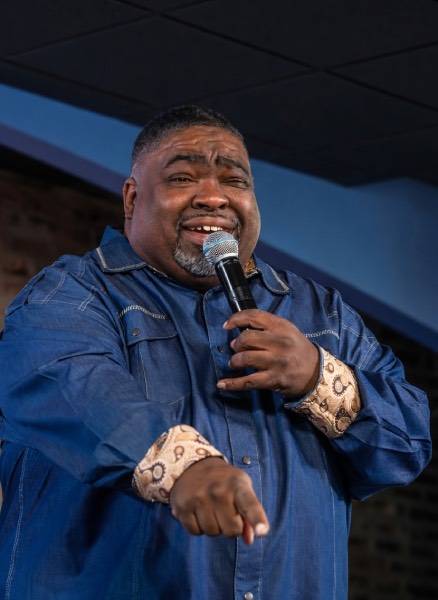
“Steve and I took the plane, and I could hardly grasp it. We were going to record in Hollywood, at Ocean Studios, where immense legends and historical musicians tracked their names onto tape! I had stars in my eyes. Alex took us on a tour of Capitol Music, of all those legendary major studios. Everywhere, I pinched myself to believe it. I had never set foot in California, it was my very first time. Everything was beautiful, I loved every second. And in the midst of that setting, we recorded a memorable session alongside wonderful musicians.”
East Odyssey Lounge
After the golden parenthesis of the Hollywood studios, it is time to return where everything makes sense, to this legendary club that has become a true local institution: the Odyssey Lounge. Every Sunday night, this is where Lewis finds his bearings. A loyalty that doesn’t date from yesterday. “I’ve been playing here for sixteen years, actually”, Lewis confides, looking across the room. “I was the one who got things started at the beginning, with the Top Flight Band. But later on, I landed a contract to play on cruise ships alongside Slam Allen. So, I told Joe Pratt : ‘Go ahead, take over, the spot is yours.’ And Joe has been handling it beautifully ever since with the Source One Band.” In a city where the night can sometimes be electric, the Odyssey has managed the feat of weathering the years while remaining a haven of peace. I ask Lewis what makes the magic of this place, why this spot has become over time the essential hub for an entire community. “Well, you see, it’s because people here are easygoing”, he explains to me. “It’s a crowd of folks in their thirties and up. There’s no drama, no schemes, nobody crosses the line. Everyone comes to have a good time, listen to good music, and that’s all that matters. People deeply love this music. Plus, the club and the band have received very good press. Here, the only rule is to have a good time.”
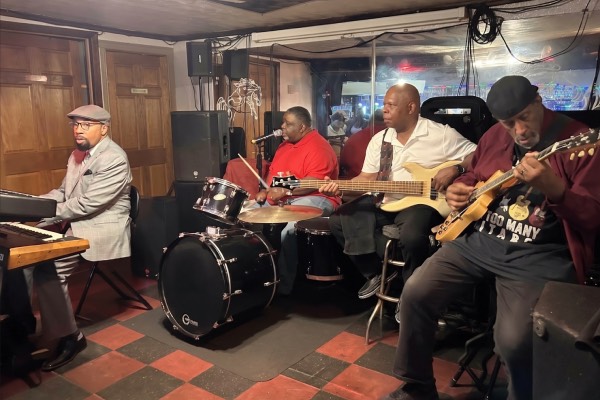
Having a good time, certainly, but with a high-flying musical standard. The moment has come to talk about this groove machine that is the Source One Band. I ask Lewis to describe the alchemy and the highly specific relationship he has built with Joe Pratt. “I’ve been playing with Joe for quite a few years now, and he is an exceptional musician. Between us, it’s second nature, I know exactly what he’s going to do, and he knows what I’m going to do. It’s the same thing with Stanley Banks on keyboards. Stan knows precisely where we’re going, because he and I have been playing together since the days of JoJo Murray. On guitar, we have the talented Lee Holloway, who has an incredible groove. He joined the lineup after the passing of our late great Walter Scott. Our alchemy comes from there, quite simply. Everyone has known each other by heart for decades. To deliver the best of our music, we rely on this shared history, and on the memory of what we built with Walter Scott.”
Big Lew & The Crew
In parallel with his role as a rhythmic anchor alongside Joe Pratt, Lewis felt the need to lead his own project. He founded his own lineup, called, named Big Lew and The Crew, where he regularly swaps his drumsticks for the leader’s microphone. I ask him what the artistic vision is behind this more personal project. “My vision is simply for people to appreciate blues, soul, R&B in all its breadth”, he explains passionately. “I want to play music that others aren’t playing. Everyone knows the big hits spinning on repeat on the radio, but nobody plays the B-sides. Yet, those are often magnificent gems just waiting to be rediscovered. That’s what I want to expose the audience to.” To bring these hidden treasures of Black American music back to life, Lewis surrounded himself with a tight guard of solid musicians, capable of following him on any groove. “In the band, we have Daron Carson Walker on drums, Kovan on bass, and TJ Johnson on guitar. And for keyboards, it’s C.J. or Chris, who comes to us from Indiana. It’s quite a team.” Seeing him lead his band with his voice, a question nags at me. This singing, so skillful, so inhabited, was it a secret talent cultivated in private or a discipline developed later on ? Lewis smiles, remembering his younger days… “To tell you the truth, I started singing when I was younger. With some friends, we had started the Rush Hour Blues Band. One night, I sang the classic Mom’s Apple Pie, just like that, without taking myself seriously. Everyone came up to me saying: ‘Man, you sing great. You should keep doing it !’ But I hardly paid attention. In my head, I thought: ‘Yeah, right, that’s nice…’, but my absolute priority was the drums. And then, it just came back naturally. I got into the habit of opening the first set for JoJo Murray, from time to time.” “Yes, that’s true”, I interject. “I saw you sing alongside JoJo back then, and it was wonderful.” “Thank you”, he concludes, touched by the memory. “It was truly at that time, on stage with JoJo, that I genuinely developed and embraced my singing.”
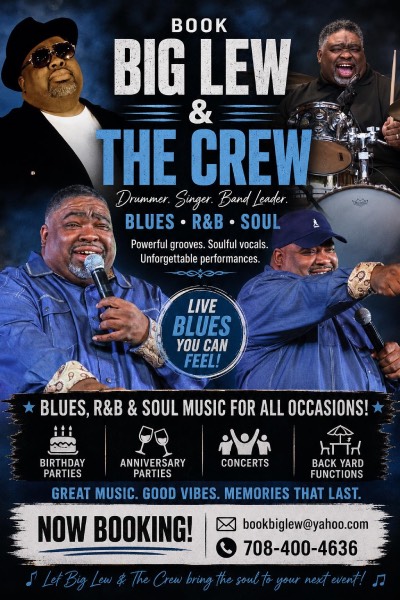
Talking about Big Lew and The Crew, this fresh and ambitious project, inevitably brings us back to the reality of the field. In Chicago, the circuit has changed profoundly, and carrying your own band has become difficult. I ask Lewis how he perceives the city’s current scene and the growing difficulties in securing regular bookings in clubs. His face grows more serious. His face takes on a more thoughtful look, but a quick smile lightens it up. “Oh, man… It’s true that the scene has changed and you’ve gotta hustle a bit more to get gigs. Twenty years ago, neighborhood clubs were on every corner, especially on the West Side. Today, things have shifted, most of the action moved up to the North Side, with just a few strongholds left on the South Side. But you know what ? Chicago blues is tough. The scene is still very much alive, it’s just evolving, that’s all. The real heads always know where to find us, and as long as we’re out here playing from the heart, that flame is never gonna die !” The takeaway is lucid, tinged with a legitimate nostalgia for an era when music echoed from every corner, driven by passionate owners and loyal regulars. The names of the vanished sanctuaries resurface. “It’s true”, Lewis continues. “I remember certain West Side spots like the Starlite, the Wash Lounge, or the Rooster’s Palace. And of course, Gene’s Playmate… All those clubs ruled the scene.” Yet, he doesn’t dwell on regret. For a drummer of Lewis’s caliber, salvation is always in the next beat, in the upcoming project. To close our interview, I ask him about the concrete ambitions he holds for his band. His eyes fixed once more on the future, the drummer-singer recovers his smile. “My goal now is to track a new album”, he confides. “It’s an exciting project, and Alex Dixon and I have actually just been tossing some ideas around.”
Epilogue : nights on the South Side
Time to close the notebook. Around us, the musicians of the Source One Band are setting up and tuning their instruments. Time flew by with Lewis, but at the East Odyssey, the night is just getting started. The Sunday regulars have already been holding down the room for the last two hours as singer New Orleans Beau gets ready to join the lineup. I blend into the crowd of this timeless club. For the moment, I am anchored in Chicago’s deep South Side, savoring every stretching second alongside Lewis ‘Big Lew’ Powell.
By Jean-Luc Vabres
Acknowledgments to Lewis « Big Lew » Powell, Willa Hawkins-Powell, Johnnie Reed, Howard White, Stanley Banks, Lee Holloway and Joe Pratt.